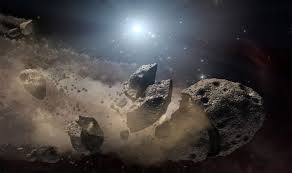
Astronomers recently found what seems to be a planet around a white dwarf star, or what’s left of it anyway. Due to the intense gravity of the white dwarf star, which is what our Sun will become after its done being a red giant in the future, the planet was ripped the shreds, with what it once called part of itself, orbiting around the white dwarf.
Not cool.
Actually it’s very cool to see something like this happen, since for astronomers to see an exoplanet this small is very hard to do, making this quite the special occurrence. The only reason this planet survived the red giant phase of its star, named an appropriate SDSS J122859.93+104032.9 (catchy), was because it was out far enough from its parent star that it was not able to be swallowed whole by the behemoth the star once was.
Technically, the scientists didn’t see the planet as I see my screen right now. Using a method that measured the amount of brightness being sent from calcium ions, which alerted them there was gas circulating in the disk, they were able to determine that it was a planetesimal orbiting the star. Previously, they had been monitoring this specific white dwarf since it is one of the only ones of it kind with a disk filled with gas and debris. They were not able to get the look they needed until recently in the past couple of years, which eventually led them to this conclusion.
While this is cool and exciting news, it does put into perspective just how powerful the world around us is. An entire planet was shredded due to an insane amount of gravity, something that we feel every day. It makes me appreciate the situation us as humans are in in our sanctuary we call Earth just that much more.

 JustInScience